
Development should not come at the expense of community rights, livelihoods and dignity.
When communities lose ancestral lands to extractive and infrastructure projects, compensation alone cannot address the full extent of their losses. Meaningful consultation, community consent and accountability must also be part of the process.
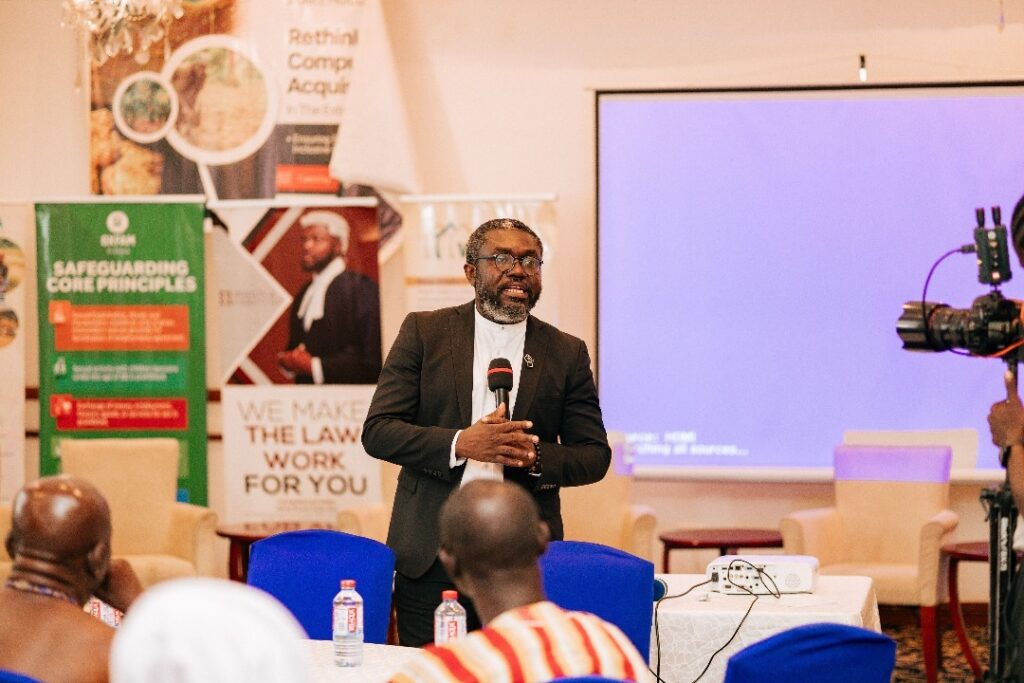
These issues took centre stage at a national forum convened by A Rocha Ghana, Oxfam in Ghana, Wacam, Merton & Everett LLP and the Centre for Public Interest Law (CEPIL). The discussions examined compulsory land acquisition and Free, Prior and Informed Consent (FPIC) as essential pillars of equitable natural resource governance.
The Problem: Rights Without Effective Protection
Although Ghana’s Constitution, the Minerals and Mining Act, 2006 and the Lands Act, 2020 provide legal safeguards for property rights and compulsory acquisition, concerns remain about their implementation.
Discussions referencing the Newmont Ahafo North and Petroleum Hub projects highlighted concerns about inadequate community engagement, undervaluation of land and livelihoods, and weaknesses in accountability.
Why FPIC Matters
Free, Prior and Informed Consent (FPIC) means communities should receive relevant information and have a meaningful opportunity to decide on developments affecting their lands and livelihoods.
It is more than consultation after decisions have been made. It requires genuine dialogue, respect for community rights and meaningful participation in decisions.
What Needs to Change?
The forum highlighted four priorities for reform:
- Legislate FPIC: Establish clear legal protections, enforcement mechanisms and remedies for violations.
- Rethink compensation: Recognise cultural, environmental, social and livelihood losses beyond market value.
- Strengthen legal education: Equip communities with accessible legal information, paralegal support and advocacy resources.
- Build stronger partnerships: Support collaboration between communities and civil society organisations while respecting local voices.
Justice Must Begin With Communities
Land is more than an economic asset. It represents identity, heritage, livelihood and belonging.
At Merton & Everett LLP, we believe that responsible natural resource governance must place people at the centre of development. Ghana’s extractive sector can contribute to national progress without undermining the rights and dignity of affected communities.
The way forward must be built on meaningful consent, fair compensation and accountable governance.